The Spanish Origins of Misamis
Misamis was an old Spanish town that existed as far back as the Spanish era. Interestingly, it was not conquered by force of arms but through faith—thanks to the efforts of Jesuit missionaries.
Although the origin of the name “Misamis” remains somewhat obscure, it is believed to have been derived from the Subano word “Kuyamis,” which refers to a variety of coconut. Over time, this term evolved into the more convenient and easily pronounceable form “Misamis.”
The Early Inhabitants and Settlements
Originally, Misamis was populated by the Subano people, known for their love of freedom and independence in Northern Mindanao. Before the arrival of the Spaniards, the area faced constant threats from marauding pirates from the nearby Lanao provinces.
To escape these raids, many Subanos migrated to Misamis Oriental and Zamboanga del Norte, particularly in Dapitan, where peace prevailed. Later, settlers from Bukidnon, Cebu, and Bohol arrived, forming one of the earliest waves of migration to the area.
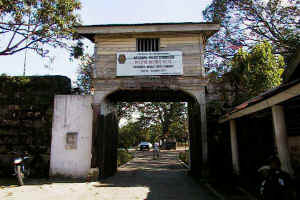
Cotta de Santiango: It’s being used now as a headquarters of the Philippine National Police
The Establishment of Misamis as a Spanish Stronghold
In 1757, as pirate attacks on coastal towns intensified, Misamis was chosen by the Spanish conquistadors as their principal anchorage in Mindanao. A stone fort known as the “Cotta” was constructed—an enduring landmark that still stands today.
With the fort and town established, the seat of the Military Government was transferred from Iligan to Misamis. Eventually, Misamis became the capital of the district that encompassed much of Northern Mindanao during the 18th and 19th centuries.
During World War II (1943–1945), the Japanese forces garrisoned the Cotta, digging foxholes near and beneath its walls. This weakened the structure, leading to the collapse of its southwest bastion during the 1955 earthquake.

Senator Jose Fortich Ozamiz
From Misamis to Ozamiz City
Three years after the end of World War II, Misamis achieved cityhood. On July 16, 1948, it was officially declared a Chartered City through House Bill No. 1656—a date that coincides with the Feast of Our Lady of Mount Carmel.
The city was renamed Ozamiz City in honor of the late Senator José F. Ozamiz, a national hero who led underground resistance efforts against Japanese occupation in Misamis Occidental. He was imprisoned at Fort Santiago and later executed at La Loma Cemetery alongside other Filipino patriots.
Economic Growth and Modern Development
From an old Spanish settlement, Ozamiz has evolved into one of the fastest-growing cities in Northwestern Mindanao. The city’s strategic location and infrastructure development have strengthened its role as the growth center of the Panguil Bay Subregion.
Key infrastructure projects have fueled this progress, including:
-
The Oroquieta–Molave Road (Kuwait Grant Project) – a concrete highway that connects north- and southbound travelers with ease.
-
The Cagayan de Oro–Ozamiz–Dipolog and Ozamiz–Kapatagan routes, made possible by two competing barge companies operating between Ozamiz Port and Mucas Port in Kolambugan, Lanao del Norte.
-
The massive concreting of major city roads, improved street lighting, and the P75.7 million seaport expansion.
-
The ongoing development of the Labo Airport, positioning Ozamiz as a major transshipment hub in Mindanao.

City of Ozamiz Integrated Bus/Jeepney Terminal
Boost in Commerce and Transportation
The establishment of the Integrated Bus and Jeepney Terminal and the Public Market, funded by a USAID grant, has significantly increased economic activity.
Modern shopping malls now thrive across the city, offering a wide range of local and imported products. The growing number of commercial banks—from fewer than ten in the 1960s to over twenty today—reflects Ozamiz’s thriving economy.
Rural and Infrastructure Advancements
Ozamiz’s development extends beyond the urban center. Farm-to-market roads now connect even the remotest barangays, enabling farmers to easily transport their produce to marketplaces.
The Poliken Spring Water Supply System now provides clean, potable water to sixteen barangays that had never before experienced a reliable water service.
Connectivity and Public Utilities
Modern communication systems—including cellular networks and digital landlines—have boosted business operations and attracted new investors. The city also benefits from a reliable 220-volt power supply, among the lowest electricity rates in the region, and the dependable Misamis Occidental Water District (MOWD) system, which supports agriculture, industry, and household use.
A Vision for Sustainable Growth
Today, Ozamiz City continues to pursue sustainable development by investing in infrastructure, utilities, and community welfare. Guided by its vision for inclusive progress, the city remains committed to improving the quality of life for its residents while strengthening its position as a key economic center in Mindanao.
Bodacious view about RY OF OZAMIZ CITY. Thoroughly enjoy this point of view!